
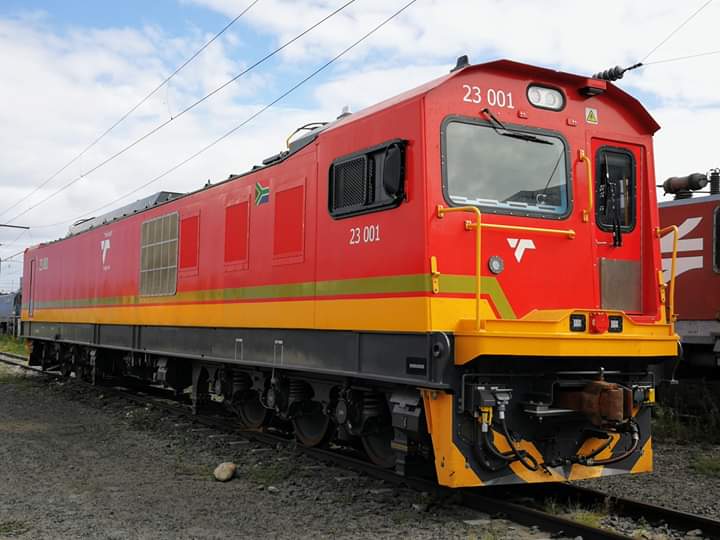
Springs are easy to overlook. They have no moving parts in the usual sense, they rarely make a noise and they are often hidden behind other components. Yet suspension springs carry the full weight of every locomotive, wagon and coach, and a broken or sagging spring changes how the vehicle rides, how its wheels load the rail and how its other parts wear.
This article covers where springs are used on rail vehicles, how they fail, what to check and how to specify replacements.
Where springs are used
Suspension
- Primary suspension sits between the axle or axlebox and the bogie frame.
- Secondary suspension sits between the bogie and the vehicle body or bolster.
On freight wagons, coil springs grouped in sets in the bogie are common. Locomotives use coil springs, and coaches may use coil springs, rubber elements or air springs, depending on the design.
Other springs on the vehicle
- Brake equipment uses return springs in brake cylinders and rigging.
- Couplers and draft gear use springs to absorb buffing and draft forces in some designs.
- Engines, compressors and valves depend on valve springs and control springs.
- Doors, latches and mechanisms use smaller springs throughout.
The same basic principles of inspection and specification apply, though suspension springs get the most attention because of the loads they carry.
The main spring types
- Helical coil springs: the most common type on modern rolling stock, made from round bar wound into a coil.
- Leaf springs: stacked steel leaves, found on older wagons and some special vehicles.
- Rubber and rubber-metal elements: used for primary suspension and mounts in some designs.
- Air springs: rubber bellows filled with compressed air, common in passenger coach secondary suspension.
How springs fail
Fatigue cracking and breakage
Springs flex millions of times in service. Small surface defects, corrosion pits or damage can start a fatigue crack, which eventually breaks the coil. A broken coil is usually visible at the ends or where the crack starts.
Loss of height (permanent set)
Over time, or after overload, a spring can settle so that its free height is lower than it should be. The vehicle then sits lower or unevenly, which changes wheel loads and can affect safety on uneven track.
Corrosion
Damaged coatings let corrosion start. Corrosion pits are stress raisers and a common starting point for fatigue cracks.
Wear and coil clash
Spring ends wear against their seats, and coils that close up under load can rub together. Both suggest the spring is overloaded, too soft or the wrong spring.
Mismatched sets
Where several springs share a load, a single weak or mismatched spring overloads its neighbours.
What to check during inspection
The maintenance manual for the vehicle sets the actual limits and intervals. In general, an inspection looks at:
- Visual condition: cracks, broken coils, corrosion, coating damage and wear marks.
- Seating: whether each spring sits correctly in its seats and retainers.
- Free height: measured with the spring removed, against the limit in the manual or on the drawing.
- Load height or deflection: where the manual requires a load test.
- Matching within sets: springs in a group are often graded by height or rate and must be matched according to the manual.
- Ride height of the vehicle: uneven height can point to a spring problem.
Springs removed during overhaul should be checked even if the vehicle rode well, because a spring that is close to its limit will not last until the next overhaul.
Specifying a replacement spring
If you have a drawing or a manufacturer's part number, use it. If you are re-engineering a spring from a sample, a complete specification includes:
- material and its condition;
- bar or wire diameter;
- outside or inside diameter of the coil;
- free height;
- number of active coils and total coils;
- end form: closed and ground, closed not ground, or open;
- direction of winding (left- or right-hand), especially for nested springs;
- spring rate or load at a stated height;
- solid height;
- heat treatment and surface treatment, such as shot peening, and the coating.
Measuring a used spring gives you most of these, but remember that a used spring may already have lost height. Use the drawing or manual values for free height and load where you can, rather than copying a tired spring. Heat treatment is essential to spring performance; our article on heat treatment for rail components explains why.
Replace in sets
When one spring in a set fails, consider whether the others are close to their limits too. Many maintenance manuals require springs to be replaced or matched as sets, so that each carries its fair share of the load.
Springs at Deomac
Spring work is one of the processes listed among Deomac's services, together with heat treatment, forging, machining and plating. Bogie and undercarriage parts are part of the Deomac range for locomotives, wagons and coaches.
To get a quote for replacement springs:
- send the drawing or part number, or a sample spring with its measurements;
- state the vehicle type and where the spring is fitted;
- give quantities, including how many make up a set;
- say whether springs must be matched or graded.
You can search the parts list for catalogued springs and send your enquiry through the contact page.
Related reading
For other wagon running-gear parts, see wagon spare parts: a guide for SA operators. For coaches, where air springs are common, see coach parts: keeping passenger stock running.
Summary
Springs carry the load, set the ride height and protect everything above them. Inspect them for cracks, corrosion and loss of height, keep sets matched, and specify replacements completely, including free height, rate, end form and heat treatment. A spring that is the wrong rate or height can cause problems far beyond the spring itself.
- springs
- spring work
- bogie parts
- suspension
- rail maintenance